
Investments in environmental protection and occupational safety have long been part of everyday life for many companies in the recycling and steel industries. Technically, many solutions are available and often economically viable, yet in practice, we repeatedly see that exactly these types of investments become difficult to plan. The reason rarely lies in the technology, but frequently in the framework conditions.
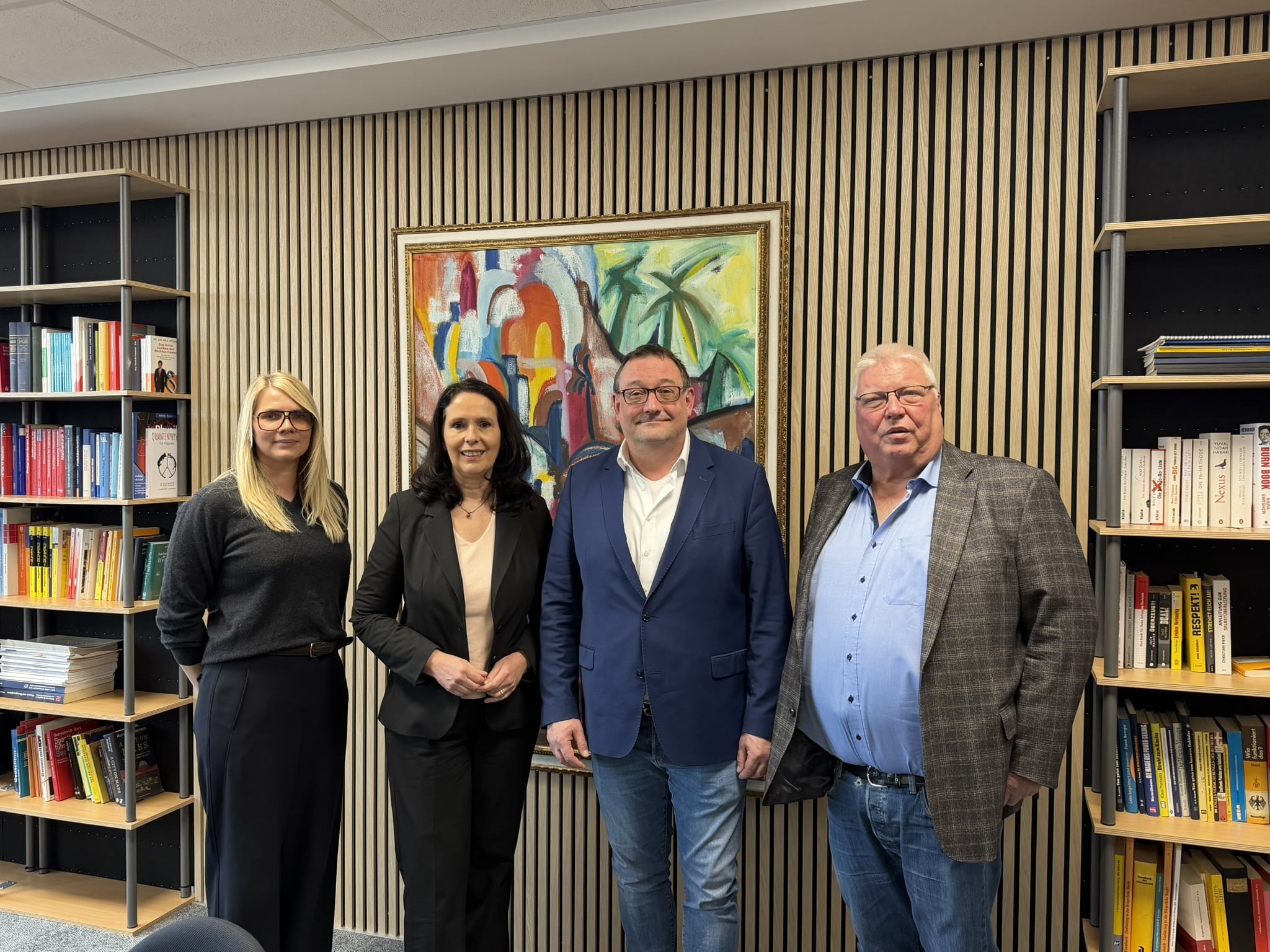
Against this background, the exchange with Member of the Bundestag Elisabeth Winkelmeier-Becker MdB during a meeting initiated by the BDSV (Federal Association of German Steel Recycling and Waste Management Companies) was particularly valuable for us. Not as a symbolic visit, but as an opportunity to bring together perspectives that often exist separately in everyday life.
Our daily reality: Technology is rarely the problem
From our perspective as a specialized plant manufacturer, a similar picture emerges time and again:
When companies want to invest in environmentally friendly storage or cleaning technology, the technical requirements are usually clear. It becomes more difficult where permit procedures are lengthy, inconsistent, or difficult to predict.
Medium-sized enterprises in particular need planning certainty. Investments in environmental technology cannot be postponed indefinitely; at the same time, multi-year permit processes can call the economic viability of projects into question. This reality shapes many discussions with our customers and was also a central point in the exchange on-site.
Why standardization and modularity can help
A thought that constantly accompanies us in this context is the role of standardized, modular systems. Not because they “bypass” permits, but because they help to clearly demonstrate requirements and map them in a repeatable way.
Based on our experience, this facilitates discussions with authorities, reduces uncertainties, and creates trust. Technology can make a contribution here—not as a substitute for regulation, but as a tool to implement it practicably.
A look into everyday political life
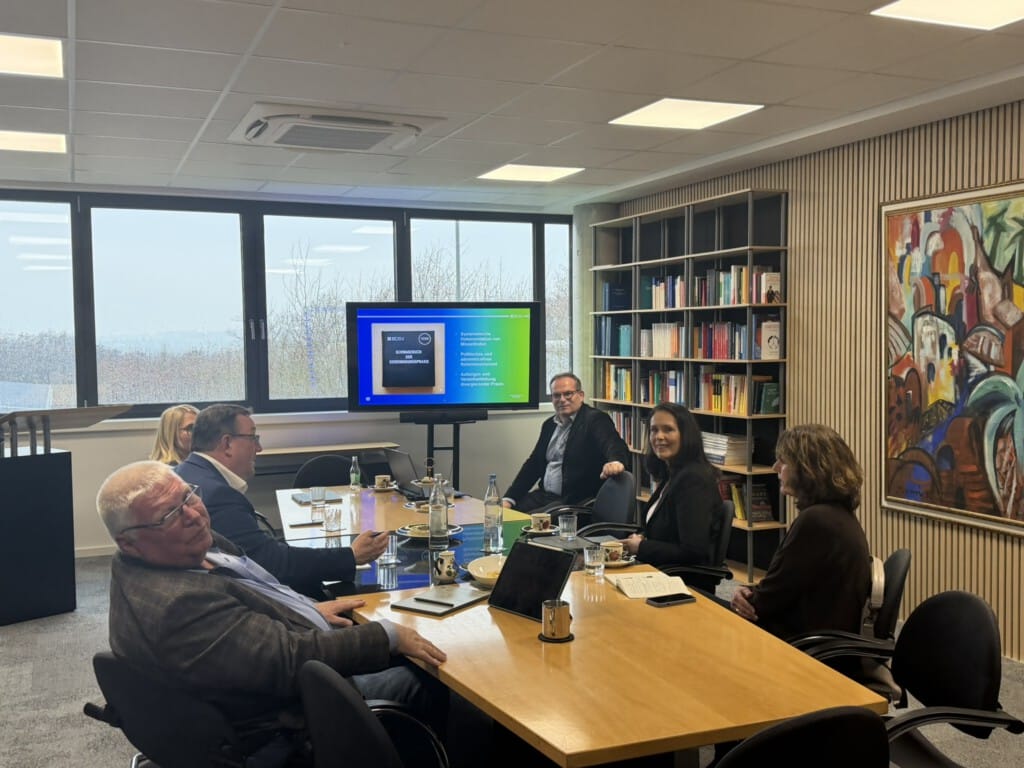
At the same time, it was very insightful for us to hear the political perspective. During the conversation, it became clear that there is a genuine interest in the economic reality, but also how complex political decision-making processes are. Trade-offs, coalitions, and legal requirements determine the scope for action.
This insight helps to put discussions into context. Many issues cannot be resolved in the short term, but they can be better understood when both sides present their perspectives openly.
Dialogue instead of mutual expectations
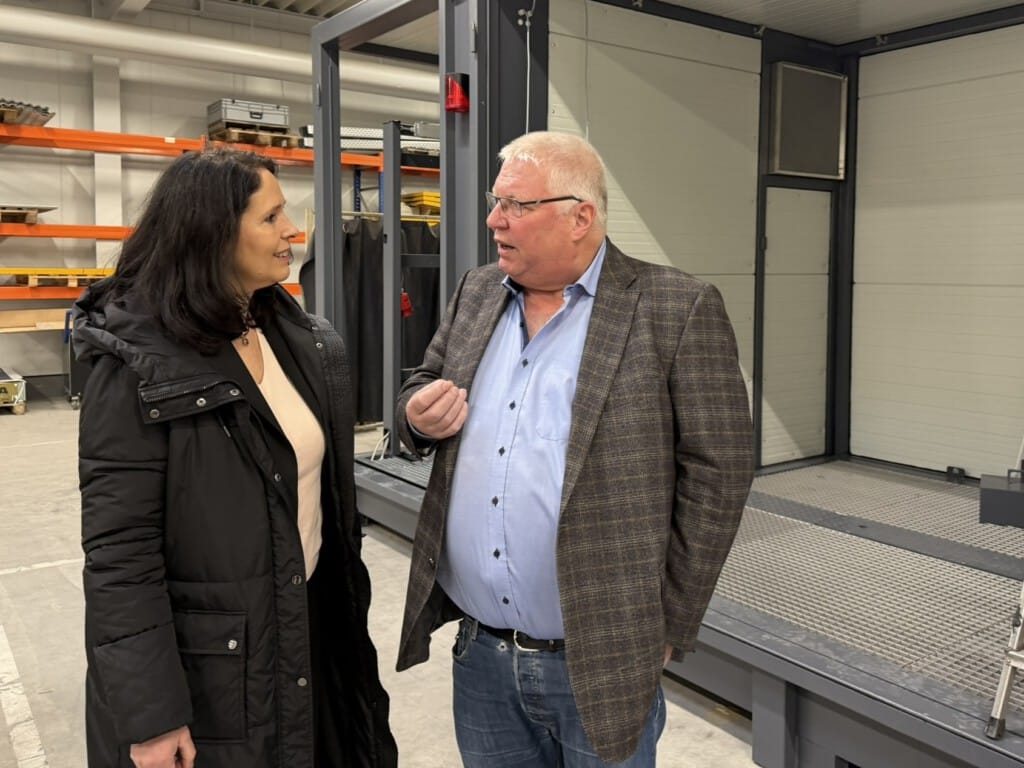
What we primarily take away from the exchange is the importance of direct dialogue. Practical regulations do not emerge without feedback from the business community, nor can political processes be evaluated without knowledge of the framework conditions.
For us as a company operating at the intersection of technology, environmental law, and operational practice, this dialogue is an important part of our work. It helps us understand developments early on and design solutions so that they function under real-world conditions.
Those interested in the association-political classification of the meeting can find it in the press release of the Federal Association of German Steel Recycling and Waste Management Companies (BDSV), which we are happy to reference here. Link: BDSV PR: Winkelmeier-Becker MdB visits INORON GmbH – Exchange with the steel recycling industry on permit procedures for environmental investments
Elisabeth Winkelmeier-Becker MdB also published her impressions of the meeting on her Facebook channel. You can find the full post here:


Leave A Comment